
It’s important to understand that spousal maintenance in Malaysia is not a one-size-fits-all obligation; it depends on various factors including the income of both spouses and the duration of the marriage. You may be required to pay or receive maintenance based on needs and financial capabilities. The court considers elements such as your standard of living during the marriage and any contributions made to the family. Knowing how much you might owe or receive can significantly affect your post-divorce financial stability, so it’s crucial to stay informed.
Key Takeaways:
- Spousal maintenance is financial support given by one spouse to another after separation or divorce.
- The responsibility to pay maintenance typically falls on the higher-earning spouse.
- Factors influencing the amount and duration of maintenance include the recipient’s needs, lifestyle during the marriage, and the payer’s financial capacity.
- Courts consider the length of the marriage and the age of the parties when determining maintenance obligations.
- Maintenance can be modified or terminated based on changes in circumstances, such as remarriage or improved financial status of the recipient.
- Disputes over spousal maintenance may require mediation or court intervention for resolution.
- Legal advice is recommended to understand rights and obligations regarding spousal maintenance in Malaysia.

Understanding Spousal Maintenance
In the context of divorce, spousal maintenance is a financial support obligation one spouse may owe to the other, aimed at meeting basic living expenses post-separation. This can be critical for maintaining a standard of living similar to what you enjoyed during the marriage, especially when one partner has been the primary caregiver or has lower earning potential.
Definition of Spousal Maintenance
Spousal maintenance, often referred to as alimony, is a legal obligation to provide financial support to a former partner after a separation or divorce. It accounts for the income disparity between spouses and is intended to help the lower-earning or non-working spouse transition to financial independence.
Legal Framework in Malaysia
The legal framework surrounding spousal maintenance in Malaysia is governed primarily by the Law Reform (Marriage and Divorce) Act 1976. Under this act, you can seek maintenance orders from the court, which considers various factors, including the duration of the marriage, financial needs, and the couple’s standard of living.
The Malaysian legal framework emphasizes a fair evaluation of both parties’ circumstances. You must provide evidence of your financial needs and living standards during the marriage, with courts also considering your current income, lifestyle, and contributions to the household. Case law illustrates that maintenance amounts can vary significantly based on these criteria, with some orders lasting for a defined period or until circumstances change, such as remarriage or a significant change in income. Your advocacy for equitable support hinges on demonstrating your financial needs effectively.
Factors Determining Spousal Maintenance
Several factors play a role in determining spousal maintenance amounts and obligations. These might include the duration of the marriage, age and health of both parties, and the standard of living established during the marriage. Additional elements considered are the financial needs of the spouse requesting maintenance and the financial capacity of the payer. After assessing these factors, the court can make a more informed decision.
Needs of the Recipient
The needs of the recipient are pivotal in calculating spousal maintenance. You must consider your basic living expenses, including housing, utilities, and food, as well as any additional needs like healthcare or education. The court will evaluate your lifestyle during the marriage and how it has changed post-separation.
Financial Capacity of the Payer
The financial capacity of the payer significantly impacts the determination of spousal maintenance. The payer’s income, assets, and overall financial obligations are examined to ascertain whether they can afford to support their former spouse adequately. This assessment ensures that while the payer is obligated to contribute, it is balanced against their ability to maintain their own living standards.
When evaluating the payer’s financial capacity, the court looks at various aspects, such as their monthly income, job stability, and any debts they might have. For example, if the payer is a well-paid professional with substantial savings, the court might impose a higher maintenance obligation. In contrast, if they are struggling financially or are unemployed, the maintenance amount could be significantly lower. This comprehensive approach aims to ensure fairness for both parties while respecting the payer’s financial realities.
Duration of Spousal Maintenance
The duration of spousal maintenance largely depends on the circumstances surrounding the marriage and the specific needs of the recipient spouse. In many cases, courts may award maintenance for a limited time, allowing the recipient to gain financial independence. Typically, this duration hinges on factors such as the length of the marriage, the age of the recipient, and their ability to support themselves. It’s not uncommon for maintenance to be reviewed periodically to ensure it remains appropriate.
Temporary vs. Permanent Maintenance
Temporary maintenance is often granted during divorce proceedings to provide immediate support before a final decision is made, while permanent maintenance can be awarded post-divorce when ongoing support is deemed necessary. The distinction is significant, as temporary support aims to stabilize the financial situation, whereas permanent support reflects long-term arrangements that may last for years or even indefinitely, depending on the circumstances.
Conditions for Modification or Termination
Modification or termination of spousal maintenance can occur due to various factors such as changes in financial circumstances, remarriage of the recipient, or significant changes in the payer’s income. Courts evaluate these conditions to ensure fairness and adaptability in maintenance obligations.
When assessing conditions for modification or termination, the court will consider any substantial changes that affect financial stability. For example, if you secure a well-paying job or your former spouse marries someone who can provide financial support, you may petition to reduce or end the maintenance payments. Conversely, if unexpected expenses arise, such as medical bills, you can seek a court’s intervention for an increase. Documenting these changes is important for a successful modification or termination request.
Calculation of Spousal Maintenance
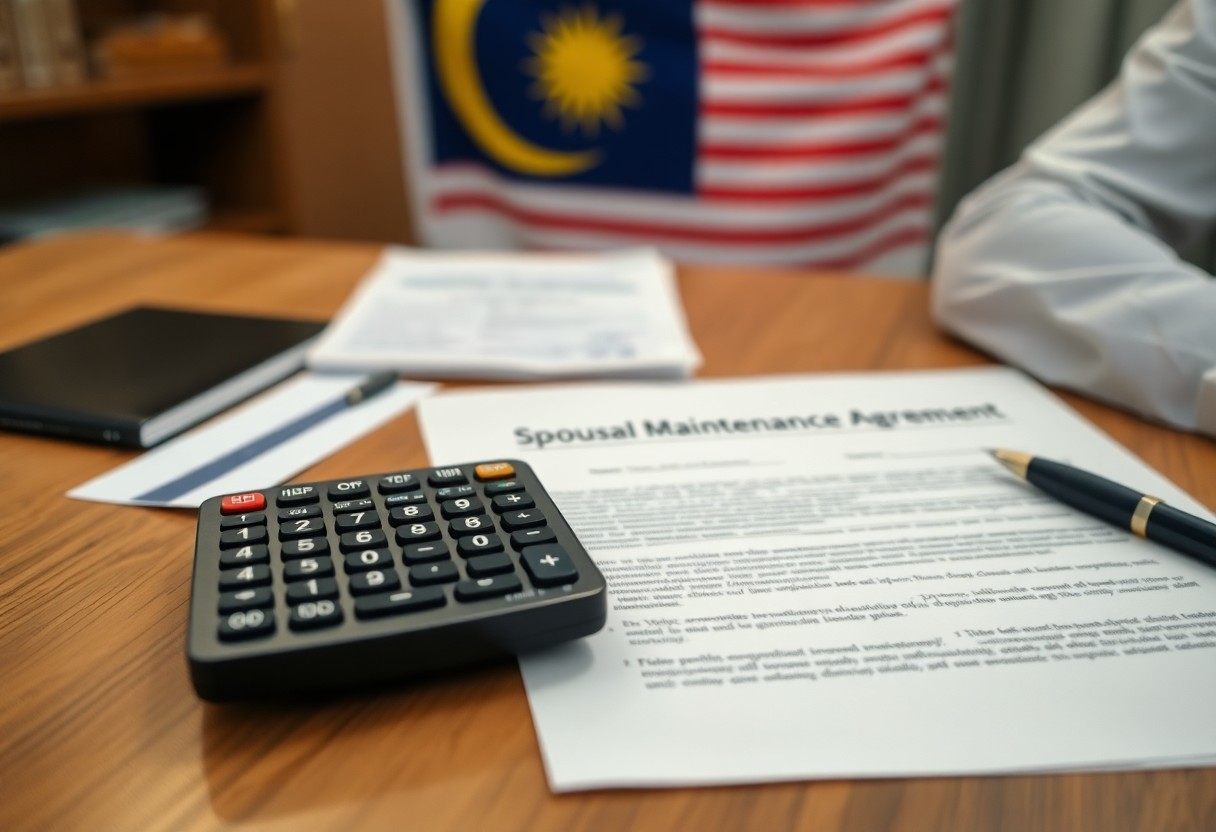
The calculation of spousal maintenance in Malaysia involves a comprehensive analysis of the financial circumstances of both parties. Factors such as income, assets, and standard of living during the marriage are evaluated to determine a fair support amount. The court may also consider the recipient spouse’s needs and contributions to the family, ensuring that the maintenance aligns with both spouses’ abilities to pay and receive support.
Guidelines and Formulae
While there are no fixed guidelines for calculating spousal maintenance in Malaysia, courts typically utilize a combination of considerations, including the income disparity and duration of the marriage. Some practitioners suggest using a formula based on a percentage of the payer’s income, often ranging from 20% to 30%, depending on the circumstances. This serves as a benchmark for negotiations and court assessments.
Considerations for Childcare and Other Expenses
Childcare costs and additional expenses significantly impact the spousal maintenance calculation. Maintenance should ideally cover not only living expenses but also child-related costs, which can include schooling, healthcare, and extracurricular activities. Courts recognize these obligations and will often adjust maintenance amounts accordingly to ensure that children’s needs are met.
When assessing childcare and other expenses, you should be aware that courts take a holistic approach. For instance, if you are the custodial parent, your spousal maintenance may be higher to reflect the additional financial burden of raising children. Expenses such as tuition fees, medical costs, and daily caregiving should be documented and considered in the calculation. The court aims to establish a balance, ensuring that all necessary expenses are covered while also respecting each party’s financial capabilities.

Common Misconceptions about Spousal Maintenance
Many individuals hold inaccurate beliefs about spousal maintenance that can cloud their understanding of this financial obligation. Some assume that it is automatically granted to the lower-earning spouse post-divorce, while others believe it is solely based on the length of the marriage. Misconceptions like these may lead to unrealistic expectations and hinder effective negotiation during divorce proceedings.
Myths vs. Reality
One prevalent myth is that spousal maintenance is an entitlement rather than a case-by-case determination. In reality, courts evaluate various factors, including both parties’ financial positions, living standards during the marriage, and the recipient’s ability to support themselves. Your specific situation plays a significant role in determining whether you owe or will receive support.
Impact of Social Norms
Social norms can significantly influence perceptions and outcomes related to spousal maintenance. The beliefs surrounding gender roles and financial responsibility often dictate expectations, which may not align with legal standards. As societal attitudes evolve, the stigma associated with receiving support is changing, and this shift impacts how spousal maintenance is negotiated and enforced.
In many cultures, traditional gender roles dictate that the husband is the primary breadwinner, creating a stigma for men who seek spousal maintenance. This can result in unequal negotiations, where men feel pressured to forgo their rights, while women may face societal judgment if they pursue support. Challenges stemming from these social norms can result in unbalanced decisions that don’t reflect the legal realities you may face in the divorce process, underscoring the importance of approaching this matter with a clear understanding of your rights and obligations.
Legal Procedures for Claiming Spousal Maintenance
To initiate a claim for spousal maintenance in Malaysia, you must file a notice of application in the family court. This process includes submitting relevant documents such as income statements, proof of expenses, and details of your financial needs. It’s advisable to seek legal assistance to ensure all documentation is accurately prepared and submitted within the designated time frames.
Initiating a Claim
Initiating a claim involves completing the necessary court forms and providing evidence of your financial situation and your spouse’s ability to pay. You should clearly articulate your needs, detailing the lifestyle maintained during the marriage and any changes since separation. This helps establish the basis for your claim.
Court Evaluations and Orders
Court evaluations are necessary in determining the amount and duration of spousal maintenance. The court will review evidence presented, considering both your financial needs and your spouse’s financial capacity to pay. Following evaluations, the court can issue temporary orders pending further proceedings or make final orders to outline the specific maintenance obligations.
During court evaluations, the judge examines various factors, including your standard of living during the marriage, the length of the marriage, and both parties’ income and expenses. Documentation such as pay slips, bank statements, and any custody arrangements for children may be scrutinized to assess equitable support. The evaluation process ensures that decisions on spousal maintenance are grounded in a clear understanding of financial realities, leading to fair judicial outcomes.
Conclusion
Summing up, navigating spousal maintenance in Malaysia involves understanding your responsibilities and rights. If you are the spouse seeking maintenance, your needs, along with your spouse’s ability to pay, will influence the amount awarded. Conversely, if you are obligated to pay maintenance, you must consider your financial capacity. Ultimately, having clear knowledge of the regulations, factors at play, and potential outcomes will empower you in making informed decisions in this sensitive area of family law.
FAQ
Q: What is spousal maintenance in Malaysia?
A: Spousal maintenance refers to the financial support one spouse may be required to pay to another after separation or divorce, aimed at assisting with living expenses and maintaining a similar standard of living as before the separation.
Q: Who is typically responsible for paying spousal maintenance?
A: Generally, the spouse who has a higher income or financial resources is required to pay spousal maintenance to the lower-earning spouse, depending on the circumstances of the marriage and the financial needs of both parties.
Q: How is the amount of spousal maintenance determined in Malaysia?
A: The amount is determined based on several factors including the income and financial status of both parties, the duration of the marriage, the needs of the recipient spouse, and the standard of living during the marriage.
Q: Is there a formula for calculating spousal maintenance in Malaysia?
A: There is no strict formula. Each case is evaluated on its own merits, taking into consideration the specific financial situations and needs of both spouses, which may include monthly expenses, children’s needs, and standard of living.
Q: Can spousal maintenance be modified after it has been granted?
A: Yes, spousal maintenance can be modified if there is a significant change in circumstances for either party, such as a change in income, healthcare needs, or unforeseen expenses.
Q: How long does spousal maintenance last?
A: The duration of spousal maintenance can vary, commonly lasting until the recipient remarries, reaches a certain age, or is no longer in need of financial support, as determined by the court.
Q: Are there any tax implications associated with spousal maintenance payments?
A: In Malaysia, spousal maintenance payments are typically not subject to income tax for the recipient, nor are they tax-deductible for the payer, but it is advisable to consult a tax professional for personalized advice.
