
Many individuals face the emotional and legal challenges of divorce, and getting your divorce papers signed in Malaysia is a key step in the process. Understanding the legal requirements is vital to ensure your rights are protected during this transition. This guide will walk you through the necessary steps to prepare and finalize your paperwork effectively, allowing you to move forward with peace of mind in a timely manner.
Key Takeaways:
- Obtain the necessary divorce papers, usually including a petition and supporting documents.
- Ensure both parties are in agreement regarding the terms of the divorce.
- File the completed paperwork with the appropriate family law court.
- Attend court sessions when required, to finalize the process.
- Obtain signatures from both parties as part of the filing process.
- Consider mediation if disputes arise during the divorce proceedings.
- Seek legal advice if unsure about any steps, especially regarding rights and obligations.
Understanding Divorce in Malaysia
In Malaysia, divorce is a significant legal procedure governed by various laws, including Islamic Family Law for Muslims and the Law Reform (Marriage and Divorce) Act 1976 for non-Muslims. It’s imperative to understand the implications of initiating a divorce, as it can affect your financial status, child custody, and asset distribution. The process can be complex, requiring a clear understanding of your rights and responsibilities under Malaysian law.
Legal Grounds for Divorce
The legal grounds for divorce in Malaysia differ based on whether you are a Muslim or non-Muslim. Non-Muslims typically cite irretrievable breakdown of marriage as the primary reason, which can include reasons like adultery, abandonment, or misconduct. For Muslims, grounds are outlined in Islamic law and may include serious disagreements or lack of cooperation. Establishing these grounds is vital for the legal process.
Types of Divorce
Divorce in Malaysia can generally be categorized into two types: contested and uncontested. In a contested divorce, couples cannot agree on key issues, leading to court intervention. An uncontested divorce occurs when both parties reach an agreement on all matters, making the process more straightforward and less time-consuming. Understanding these types is imperative for navigating your divorce options effectively.
| Type of Divorce | Description |
| Contested Divorce | Disagreements on key issues, requiring court intervention. |
| Uncontested Divorce | Mutual agreement on terms, leading to a smoother process. |
| Judicial Separation | A formal separation before divorce proceedings. |
| Default Divorce | Filed when one party fails to respond to divorce papers. |
| Divorce by Mutual Consent | Both parties agree to divorce terms, often expedited. |
Exploring the types of divorce available can help you choose the most suitable option based on your circumstances. Considering the differences between contested and uncontested divorces is imperative in determining how much time and resources you’ll expend during this process. You may find that an uncontested divorce simplifies matters significantly, as you can resolve most issues collaboratively and efficiently. Perceiving these distinctions might guide you toward a smoother transition.
| Divorce Type | Key Features |
| Contested | Involves lengthy court battles and disagreements. |
| Uncontested | Simple procedure with mutual consent; quicker resolution. |
| Judicial Separation | Allows parties to live apart without ending marriage. |
| Default | Follows lack of response to divorce petition. |
| Mutual Consent | Expedited process through collaborative agreement. |
Preparing Divorce Papers
Creating your divorce papers requires meticulous attention to detail. Start by gathering all necessary information, including your marriage certificate, any prenuptial agreements, and your identification documents. Accurately fill out all forms required by the court, ensuring that they reflect your circumstances clearly to facilitate a smooth process. Engaging a legal professional can help ensure that you’re on the right track and that all imperative elements are included.
Required Documentation
To file for divorce in Malaysia, you typically need to provide your marriage certificate, identification cards, and proof of residency. Additionally, if there are children involved, you must include their birth certificates and any relevant custody agreements. Financial documents such as bank statements or property ownership papers may also be necessary, particularly when discussing asset division.
Common Mistakes to Avoid
Many individuals make errors that can delay their divorce proceedings. Failing to provide complete and accurate information can lead to unnecessary complications. Additionally, overlooking required documents or misfiling papers often results in rejected submissions, prolonging the process. It’s imperative to double-check all paperwork for accuracy and completeness before submission.
One common mistake you should be wary of is not keeping copies of submitted documents. This oversight can hinder your ability to track the progress of your case or answer queries from the court. Equally, assuming that the court will contact you if there are issues is dangerous; you are responsible for ensuring that your paperwork meets all criteria and follows the appropriate filing procedures. Properly preparing your divorce papers reduces stress and paves the way for a smoother legal journey.
How to Get Divorce Papers Signed
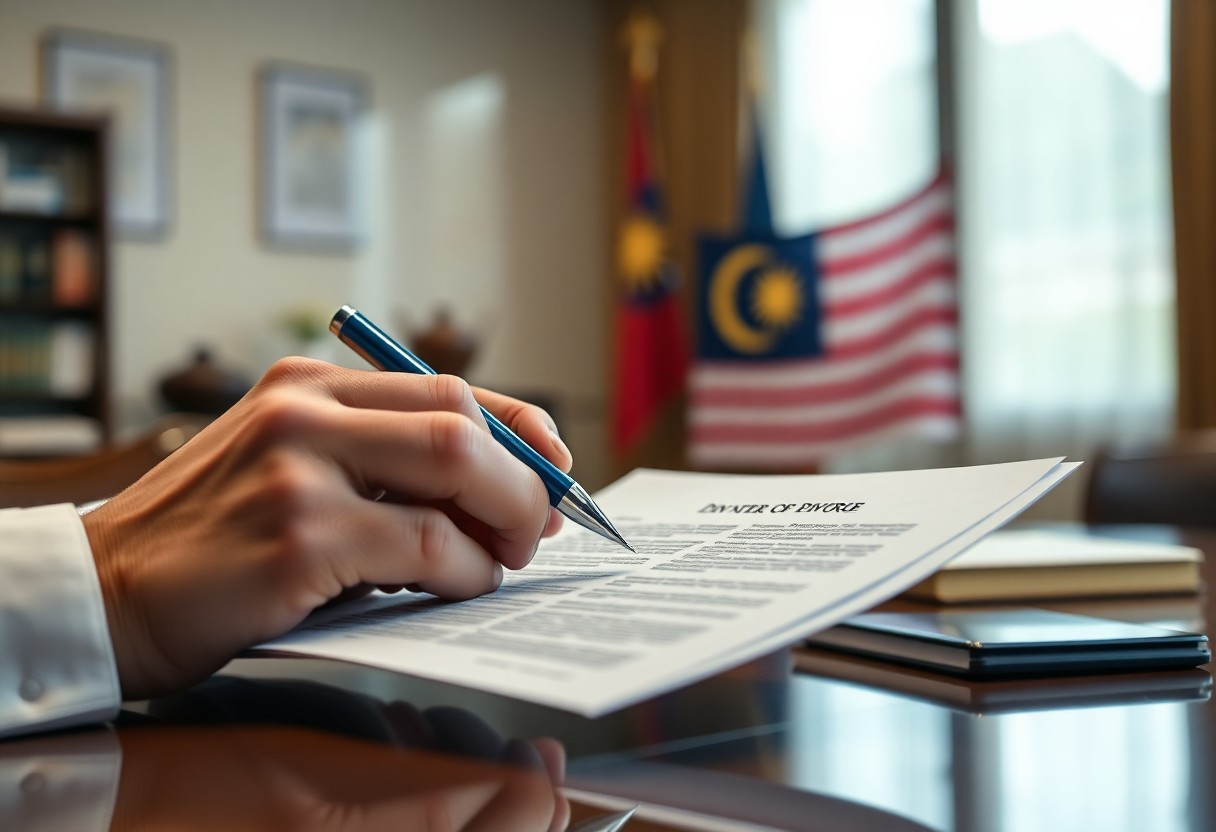
After your divorce papers are prepared, the next step involves getting them signed by both parties. You must ensure that all details are accurately filled and that both you and your spouse understand the terms outlined in the documents. This step is vital for moving forward with the process in compliance with Malaysian law.
Filing Procedures
To file your divorce papers, submit them to the relevant court along with the necessary fees. Ensure you keep copies of everything for your records. The court will then schedule a hearing date, where both parties might need to appear. Following the hearing, the court will decide whether to grant the divorce, so being adequately prepared is imperative.
Tips for Ensuring Quick Approval
To expedite the approval of your divorce papers, clarity and completeness are vital. Ensure your documents are thoroughly completed and double-check that all required signatures are present. Additionally, consider submitting any supporting documentation that can help substantiate your claims. Prompt communication with the court can also facilitate a smoother process.
- Clarity in documentation is key.
- Double-check for required signatures.
- Submit supporting documentation.
- Prompt communication with the court is helpful.
When seeking quick approval, coordinating schedules with your spouse for hearings can significantly streamline the process. You might also want to consult a legal professional who can provide guidance and ensure that everything is in order before submission. Being proactive not only improves your chances of prompt approval but also minimizes possible complications during the process. After all, efficiency is beneficial for both parties involved.
- Coordinate schedules for hearings.
- Consider consulting a legal professional.
- Be proactive to improve chances of approval.
- Minimize complications during the process.

Factors Influencing the Signing Process
Several factors can significantly impact the signing process of your divorce papers. The efficiency of communication between both parties, clarity on legal rights, and the availability of support services play vital roles. Emotional readiness and external influences, such as family or friends’ opinions, can also influence decisions. After addressing these aspects, you’ll be better positioned to arrive at a mutual agreement.
Court Considerations
Court considerations can affect the timeframe and conditions for signing divorce papers. Courts in Malaysia prioritize the welfare of any children involved, ensuring best interests are met. Furthermore, specific documentation may be requested, and compliance with local laws is necessary. Your understanding of the court’s requirements will help expedite the process.
Mediation and Negotiation Factors
Effective mediation and negotiation can streamline the signing process. Engaging in open dialogue allows both parties to discuss their needs and address concerns. The presence of a neutral third party can assist in reducing tension and fostering an atmosphere conducive to reaching an agreement. Thou navigating these discussions with transparency is crucial for achieving a fair outcome.
In mediation, it’s vital to recognize emotional triggers and potential conflicts that may arise. A skilled mediator can guide you through sensitive topics while ensuring that both parties feel heard. Additionally, having clearly defined parameters for negotiations can lead to more productive discussions. Thou approaching these sessions with an open mind can significantly improve the chances of a successful resolution.
- open dialogue
- neutral third party
- fair outcome
- personal goals
- emotional intelligence
- successful resolution
Final Steps Post-Signing
Once both parties have signed the divorce papers, you need to take the final steps to ensure everything is officially recognized. This includes registering the divorce with the relevant authorities, which may involve submitting the signed papers along with any required fees. Failure to register could leave you in a legal limbo, so prompt action is advisable.
Registering the Divorce
To register your divorce in Malaysia, you must submit the signed documents to the appropriate court or registry. This typically involves filling out a registration form and paying a nominal fee. The registration serves as an official record, allowing both parties to legally move on.
Updating Legal Documents
After your divorce is finalized and registered, it’s necessary to update all respective legal documents to reflect your new marital status. This includes changing your name on identification, updating wills, and modifying bank accounts.
Updating legal documents involves contacting various institutions to inform them of your divorce. Ensure to provide copies of your divorce certificate as proof. This may include updating your identification card, passport, and any joint property agreements. It’s advisable to also revisit any legal documents, like your will or powers of attorney, to align them with your current situation. Keeping your documents current safeguards against potential legal complications in the future.

Tips for a Smooth Divorce Process
To facilitate a smooth divorce process, prioritize open communication and stay organized. Maintain clear documentation of assets, debts, and agreements to prevent disputes. Also, practice patience and emotional stability during negotiations. Educate yourself about local laws and rights, and consider mediation as a viable option to minimize conflict and expedite procedures. Knowing these strategies can significantly improve your experience.
Communication with Spouse
Effective communication with your spouse is vital during your divorce. Approach discussions calmly, aiming for a constructive dialogue to address issues such as child custody, asset division, and support arrangements. It’s crucial to listen actively and show empathy, as this can lead to more amicable resolutions.
Seeking Legal Assistance
Engaging a qualified attorney is advisable to navigate the complexities of the divorce process. A lawyer can help you understand your rights, review legal documents, and represent your interests effectively. This support ensures that you grasp the legal implications of your decisions.
In Malaysia, family law can be complex, often varying by state, making it imperative to seek legal assistance. An experienced lawyer will clarify matters related to property division and spousal support, while also helping with court filings and procedural requirements. Your lawyer can assist in cases of disputes, thus preventing lengthy litigation and unnecessary stress. This expertise plays a vital role in expediting the process and achieving a fair outcome for both parties.
Conclusion
Following this guide will help streamline the process of getting your divorce papers signed in Malaysia. Ensure that you have all necessary documents ready and correctly filled out before approaching your spouse for their signature. If there are disagreements, consider seeking mediation services to facilitate discussions. Ultimately, it’s important to stay organized and maintain open communication to achieve a timely resolution.
FAQ
Q: What are the initial steps to take in order to get divorce papers signed in Malaysia?
A: Begin by filing a divorce petition at the relevant court, typically the Syariah Court for Muslims or the Civil Court for non-Muslims. This includes preparing necessary documentation such as the marriage certificate, identity cards, and any previous court orders.
Q: Is mediation required before filing for divorce in Malaysia?
A: Yes, in most cases, mediation is encouraged to resolve issues amicably before proceeding with a divorce application. This may involve a certified mediator or a court-appointed mediator, depending on the situation.
Q: How is the divorce petition served to the other party?
A: The divorce petition must be served to the other party through methods such as personal service, registered mail, or, in certain circumstances, via public notice if the whereabouts of the other party are unknown.
Q: What happens if the other party does not respond to the divorce petition?
A: If the other party fails to respond within the time frame set by the court, the filing party may apply for a divorce decree in the absence of the other party. This may lead to default proceedings.
Q: Can divorce papers be signed without the presence of both parties?
A: Yes, if one party is unable to attend, the court may allow the divorce papers to be signed by the other party. However, this typically requires proper notification and adherence to court procedures.
Q: Are there any fees associated with filing for divorce in Malaysia?
A: Yes, there are filing fees that vary depending on the court and the complexity of the divorce case. Additional costs may also arise for legal representation or mediation services.
Q: How long does the entire divorce process take before the papers are signed?
A: The duration varies widely, ranging from a few months to over a year, depending on factors such as court schedules, the responsiveness of both parties, and whether there are contested issues that require resolution.
