
There’s a lot to navigate when it comes to joint bank accounts after a divorce. You need to assess the implications of your shared finances, as it can affect your credit and financial stability. First, consider whether to close the account or split the funds, which could impact your liquidity. It’s important to act promptly to avoid potential disputes or unauthorized transactions. Understanding the legal requirements and your rights will help you tackle this process confidently and ensure your financial future remains secure.
Key Takeaways:
- Close the joint bank account to prevent unauthorized access by the ex-spouse.
- Settlement of outstanding debts from the account should be addressed before closure.
- Consider opening individual accounts to manage personal finances separately.
- Review any automatic payments or direct deposits linked to the joint account.
- Consult a financial advisor or attorney for guidance on asset division.
- Keep a record of all transactions prior to the account’s closure for transparency.
- Communicate with the ex-partner about the account closure to avoid misunderstandings.
Understanding Joint Bank Accounts
Joint bank accounts are shared financial accounts held by two or more individuals, typically used for joint expenses or savings. They can complicate matters during a divorce, especially concerning ownership, access, and liabilities. Knowing how these accounts function is key to navigating your financial landscape post-divorce.
Types of Joint Accounts
There are several types of joint accounts that you may encounter:
- Joint Tenancy: Both account holders have equal rights and access.
- Tenancy in Common: Ownership shares can differ and do not automatically transfer to the other upon death.
- Corporation Accounts: Accounts held by business entities, not just individuals.
- Trust Accounts: Managed by one person for the benefit of another.
- Payable on Death (POD): Beneficial for transferring assets after one person passes away.
Knowing the type of joint account plays a significant role in asset division.
Legal Implications of Joint Accounts
Joint accounts can pose various legal complications during a divorce. The access to funds, contributions to the account, and liabilities can significantly affect the division of assets. You could still be accountable for debts accrued on the account, regardless of your ownership stake.
For instance, any joint debt, such as credit card balances linked to a joint account, typically remains a shared responsibility. If your spouse incurs debt on a joint account after separation, you could be liable for that debt, impacting your financial situation. Additionally, legal courts may view funds in joint accounts differently based on contributions and usage before and during the marriage. Understanding these legal nuances will help you strategize effectively during your divorce proceedings.
Steps to Take After Divorce
Following a divorce, it’s imperative to take timely action regarding your joint bank accounts to protect your financial interests. This process includes assessing balances, communicating with your ex-spouse, and determining the future of these accounts. The clarity gained during this phase can ease transitions and reduce potential conflicts moving forward.
Assessing Account Balances
Start by reviewing the current balances of your joint accounts. Ensure you understand not only the total amount but also any pending transactions or outstanding debts linked to the account. By gathering this information, you can make informed decisions about how to divide finances fairly and equitably post-divorce.
Communicating with Your Ex-Spouse
Open, honest communication with your ex-spouse is vital when deciding the fate of joint bank accounts. Arrange a time to discuss your options, ensuring both parties feel comfortable sharing their thoughts. Approach the conversation with a focus on collaboration, aiming to work toward a solution that suits both your needs without escalating tensions.
Building a constructive dialogue may include setting a structured agenda. Discuss how each of you envisions handling account closures or transfers, and be receptive to concerns raised by your ex-spouse. For instance, if one party contributed significantly more to the account, addressing this issue upfront can prevent misunderstandings. Document any agreements made during conversations to ensure both parties adhere to the plan, thus minimizing disputes later on.

Options for Handling Joint Accounts
Addressing joint accounts post-divorce involves clear decision-making to ensure your financial independence and security. You generally have two primary options: closing the joint account altogether or transferring funds to individual accounts to maintain financial separation.
Closing the Joint Account
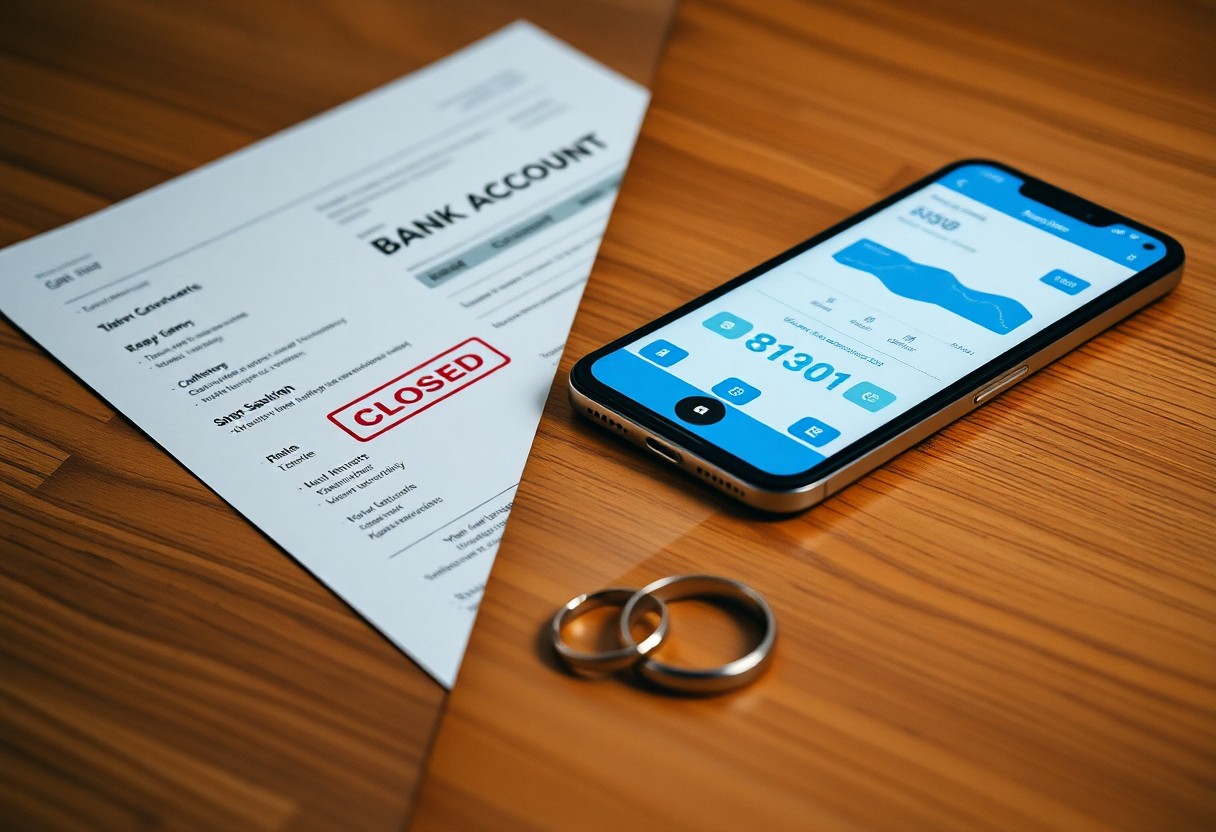
Closing the joint account is often the simplest approach after a divorce. This process involves visiting your bank together or individually, providing necessary identification, and settling any remaining balances. By closing the account, you prevent future complications, such as unexpected withdrawals by your ex-spouse, thus giving you peace of mind.
Transferring to Individual Accounts
Transferring funds from a joint account to individual accounts allows you to keep money while transitioning to a more independent financial structure. To execute this, first, agree with your ex-partner on the amount to be transferred. You can then withdraw your share and deposit it into your personal account or request the bank facilitate this transfer directly. Each party should also ensure their individual account details are updated and secure.

Financial Considerations
After your divorce, it’s imperative to reassess your financial situation, particularly concerning joint bank accounts. You should evaluate outstanding debts and the implications of shared accounts on your financial stability. Any balances, whether positive or negative, should be addressed promptly to prevent future complications as you transition to individual financial independence.
Impact on Credit Scores
Your credit score can be significantly affected by joint bank accounts. If your ex-spouse fails to manage an account or incurs debt, it may reflect poorly on your credit report, impacting your financial opportunities. Always monitor shared accounts to safeguard your credit standing.
Dividing Assets Fairly
Equitably dividing assets is fundamental during a divorce, especially with joint bank accounts. Identifying which assets and liabilities are shared can help you establish a fair division. Typically, you and your ex-partner should create an inventory of all shared resources, including savings, debts, and investments. Assessing the true value of these assets, considering tax implications and any legal agreements, makes it easier to reach an equitable settlement.
Legal Assistance
Accessing legal guidance is vital during the transition after divorce. Financial implications can become complex and must be navigated carefully, particularly regarding the division of joint bank accounts. Engaging a lawyer can help clarify your rights, outline your options, and ensure that you adequately protect your interests while complying with legal requirements.
When to Seek Legal Advice
As soon as you initiate divorce proceedings, it’s prudent to seek legal advice. If disputes arise regarding account division, or if your ex-partner is uncooperative in closing or managing accounts, a lawyer can provide necessary insights. Prompt legal counsel helps prevent potential financial loss and ensures you handle the process correctly.
Role of a Mediator
A mediator plays an necessary role in resolving disputes amicably, facilitating discussions about joint bank accounts and other financial matters. By working collaboratively, you and your ex can reach a mutually acceptable agreement that addresses account divisions without escalating tensions.
The mediation process can lead to better outcomes than litigation since mediators aim for compromise rather than adversarial resolutions. This approach often results in faster agreements, reducing stress and associated costs. Mediators can help clarify financial implications and ensure that any agreements made are fair and in your best interest. Many courts encourage mediation to resolve such issues, recognizing its effectiveness in promoting cooperative solutions.
Preventing Future Conflicts
To avoid misunderstandings and disputes post-divorce, establishing clear processes for managing finances is important. This includes creating individualized financial plans and regularly discussing any significant expenses or financial decisions. By prioritizing open communication, you can reduce the likelihood of conflicts arising from financial decisions made independently.
Establishing New Accounts
Creating separate bank accounts is a critical step after a divorce. This separation not only protects your finances but also provides a clear boundary for managing your individual expenses. Choose a banking institution that aligns with your financial goals and set up a new checking and savings account in your name only.
Setting Financial Boundaries
Setting financial boundaries involves defining what is acceptable regarding expenditures, obligations, and financial contributions in your new financial landscape. This could mean agreeing to discuss any purchases over a certain amount or identifying which bills you will individually handle. Clear boundaries help streamline financial responsibilities and minimize areas of potential conflict.
Establishing these boundaries is vital for your peace of mind; for instance, if you have a new partner, discussing how shared expenses will be handled can prevent tension and resentment. By deciding together whether to split costs or maintain your separate finances, you cultivate a spirit of cooperation. Maintaining transparency about your spending habits and financial commitments also helps create a trustful environment moving forward.
Conclusion
Taking this into account, it’s vital to address joint bank accounts promptly after your divorce to prevent any financial complications. You should consider closing or dividing the accounts, ensuring both parties agree on the disbursement of funds. Additionally, explore individual banking options to establish financial independence moving forward. Communicating openly with your ex-spouse can facilitate a smoother process while maintaining financial security for you both. Ultimately, making informed decisions about your joint accounts will contribute to a more stable financial future.
FAQ
Q: What should I do immediately after the divorce is finalized regarding joint bank accounts?
A: Immediately after the divorce is finalized, you should contact your bank to discuss the status of your joint accounts. It’s important to determine if you want to close the account or remove one party from the account. This step will help prevent unauthorized access to funds.
Q: Can I close a joint bank account if my ex-spouse disagrees?
A: Generally, both parties must agree to close a joint bank account. However, if there are legal documents from the divorce granting you control over the account, you may be able to close it unilaterally. Consult your divorce agreement or legal counsel for specifics.
Q: What happens to the funds in a joint bank account after divorce?
A: The distribution of funds in a joint bank account typically depends on state law and the divorce settlement. Funds may need to be divided equally, or one party may be awarded a greater share. It is important to clarify this in the divorce proceedings.
Q: How can I ensure my financial security after divorce?
A: To ensure your financial security, open an individual bank account as soon as possible. Transfer your portion of any joint funds to your personal account to control your finances without interference from your ex-spouse.
Q: Should I remove my ex-spouse’s name from our joint bank account?
A: Yes, it is advisable to remove your ex-spouse’s name from any joint bank accounts after divorce to prevent unauthorized transactions. This can typically be done through a simple process at your bank.
Q: Can my ex-spouse still access funds if I close the joint account?
A: If you close the joint account and transfer the remaining funds into individual accounts, your ex-spouse will no longer have access to those funds. Ensure that the account closure is documented properly to avoid disputes.
Q: What if I have automatic payments linked to a joint account?
A: Before closing a joint account, ensure that you update any automatic payments or direct deposits to your new individual account. Leaving transactions linked to a closed account can result in missed payments or penalties.
